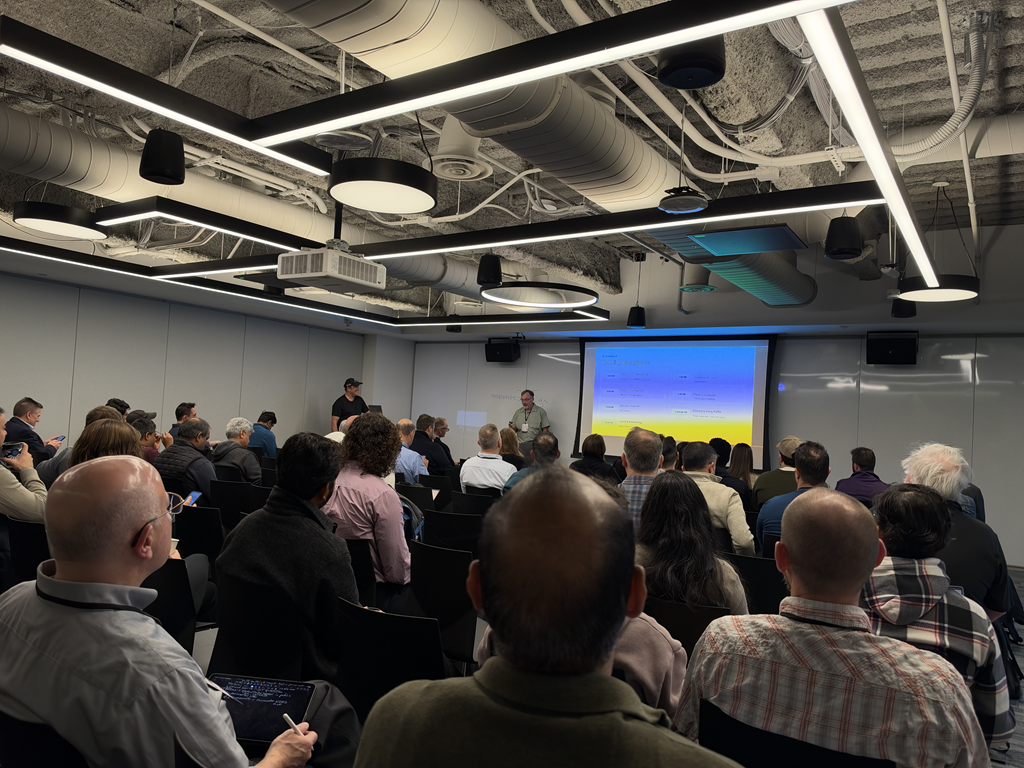
I spent Friday, November 13th, at the AI Community Conference Boston 2026, held at the Microsoft New England Research & Development Center (NERD - great name) in Cambridge, MA.
I had the opportunity to deliver two sessions, catch up with some familiar faces, and have several great conversations with the speakers and attendees.
My Sessions
Both of my sessions focused on areas I’ve been spending a lot of time with lately: building and running AI agents.
Building Resilient Durable Agents with Microsoft Agent Framework
My first session was in the morning. This session covered building reliable, long-running AI agents using Microsoft Agent Framework, Azure Durable Functions, and Durable Task Scheduler. We looked at handling failures, human approvals, and using Aspire for local development.
I’ve delivered this one a few times in 2026 and I’m really proud of it. It’s a topic I feel strongly about.
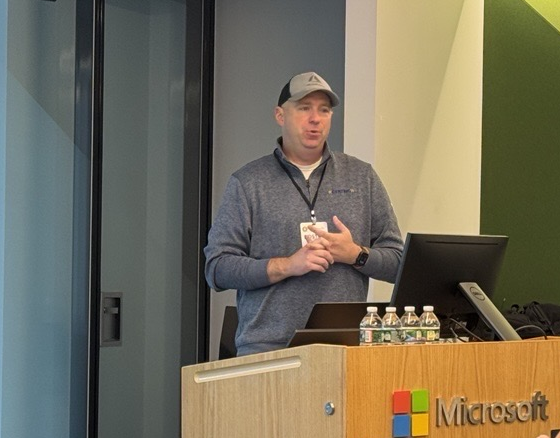
From Prompt to Code: AI Agents in Microsoft Foundry
In my afternoon session, I walked through building and hosting Prompt Agents and code-based Hosted Agents in Microsoft Foundry. We also looked at Foundry Tools and observability to help understand what agents are doing.
This session was in a bit of a smaller room due to unexpected room unavailability. It worked out really well, because it allowed a bit more of a conversational atmosphere. It went great!
Why I Enjoy Community Conferences
I’ve said it before, but I really enjoy community-run conferences.
Don’t get me wrong, big conferences like Microsoft Build and Ignite are great. There’s a lot to learn from the announcements and opportunities to interact with product teams. But there’s something different about community events.
The sessions tend to be more practical, with speakers sharing what they’re actually building, problems they’ve run into, and lessons learned along the way. It’s not always about the latest and greatest technology. It’s about figuring out how to make the technology work in the real world.
Some of the best parts of these events happen outside the sessions. I had a lot of great conversations with attendees and other speakers about what they’re working on, the challenges they’re facing, and how they’re approaching incorporating AI into their solutions and software engineering practices.
It’s always interesting to hear how others are tackling similar problems. I usually leave these events with a few new ideas and things I want to try.
Thank You
A big thank you to Bill Wilder and the entire organizing team for putting together a great conference!
Having been on the organizing side of community events, I know how much work goes into making these things happen. There’s a lot that attendees never see, and it takes people willing to give their nights and weekends to make it all work.
And thanks to everyone who attended my sessions, asked questions, or stopped to chat. I enjoyed the conversations and hope to see you at another community event soon!